
Most new players treat the red queen as a prize. It is the only red piece on the board, the game makes a fuss when it drops, and it feels like the shot that wins boards. In Classic carrom, that instinct is a little off. Once you see what the queen really does, it changes when you should go for it, and sometimes whether you should go for it at all.
This guide is about timing. If you want the rule itself step by step (what counts as a cover, what happens on a miss), read our queen cover rule guide first. Everything here uses the rules of Carrom by 22Softwares, the free game we make, and we checked each one against the game's code.
The queen in Classic adds nothing to your count
In Classic, each side has nine coins: you play white, your opponent plays black. The number next to your name is simply how many of your coins are down. The queen is not part of it. Pocket and cover the queen and your count goes up only by the coin you used to cover it.
What the queen does control is the finish. A board is won when one side has all nine coins down and the queen has been covered, by either side. Covering it yourself is not a condition of winning.
Two rules make the queen a gate that both players must pass through:
- Your last coin cannot go down while the queen is still in play. If you pot your ninth coin before the queen is covered, it comes back onto the board. There is no penalty, but it does not keep your turn.
- The same protects your opponent. If you knock in what would be their ninth coin while the queen is still in play, that coin comes back as well.
So the queen is not worth points in Classic. It is worth time. Whoever needs the gate open soonest is the one who should care most about getting it covered.
Behind on coins: the queen is your brake
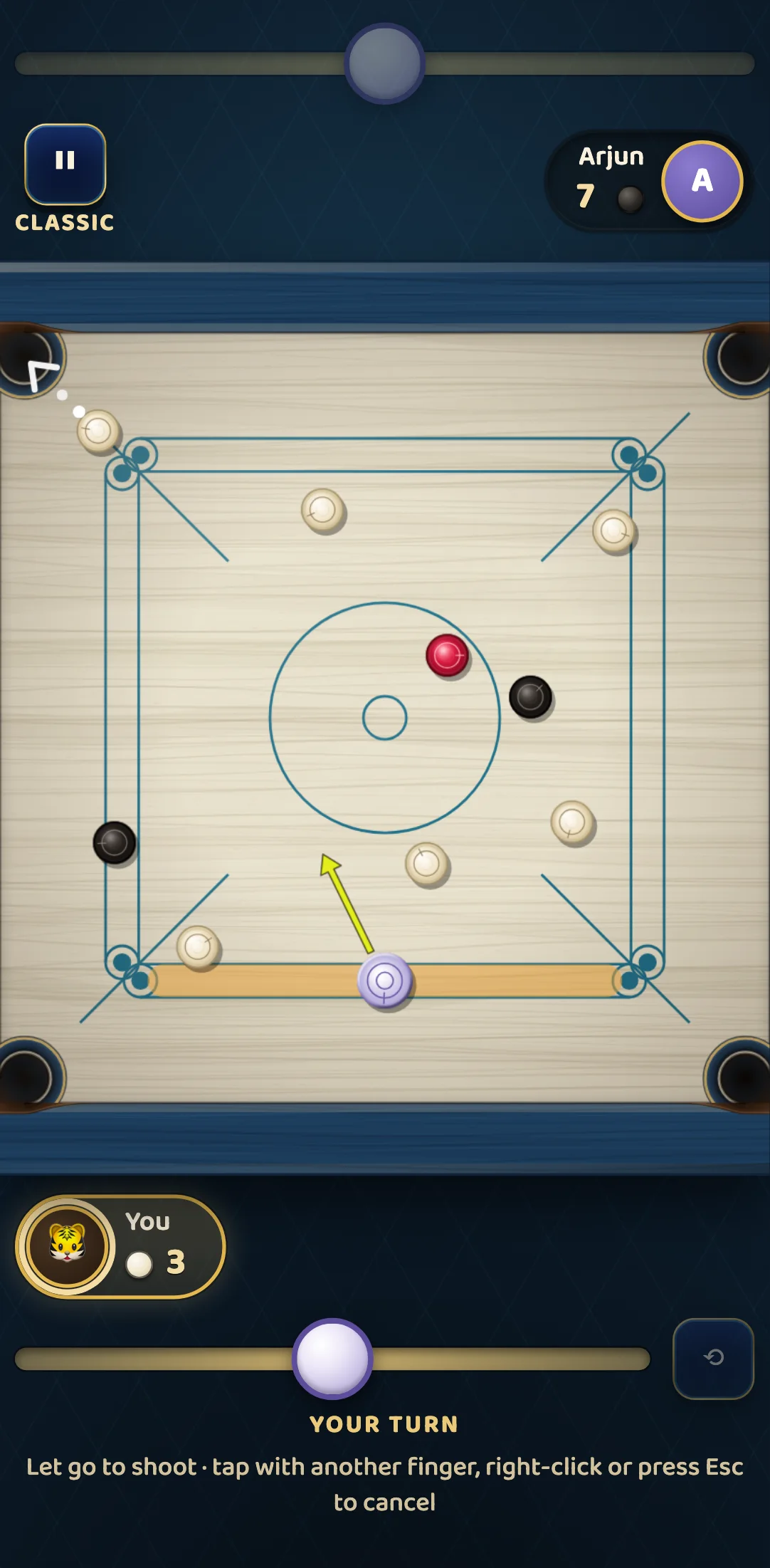
Look at the position above. Arjun has seven coins down and you have three. If the queen were already covered, Arjun would need just two more pots to win. With the queen still on the board, Arjun also has to pot the queen and then cover it before the last black coin can count. That is extra work, and extra chances to miss.
When you are well behind, that is useful to you. Some practical consequences:
- Do not rush to cover the queen yourself. Covering it opens the gate for the side that is closer to finishing, and right now that is not you.
- Keep the queen away from the pockets. When you play a safety, a queen sitting in a pocket mouth is a gift to whoever shoots next. Nudging it back towards the centre is often a good use of a stroke you cannot pot with (see our safety shots guide).
- Do not knock their ninth coin in, ever. While the queen is in play it would only come back. Once the queen is covered, pocketing their last coin for them hands them the board.
The brake only lasts so long, because you need the gate open too. The aim is to get the queen covered at the moment it suits you: ideally by you, as part of the run that wins the board.
Ahead on coins: settle the queen before you need it
When you are the one in front, the queen is the obstacle between you and the finish. A common way to lose a won board is to pot coin after coin, reach eight, and then find the queen buried in a cluster or stuck against a cushion. Now every stroke is a queen stroke, and your opponent has time to catch up.
The better habit is to deal with the queen while you still have coins to spare, around the middle of the board rather than at the end. With five or six of your coins still out, you have plenty of candidates for the cover, so a queen pot is far less risky.
Even if your opponent covers the queen, that is fine for you when you are ahead. It opens the gate, and you are the one closer to walking through it.
How to set up a queen run
Pocketing the queen keeps your turn, so the cover is always your own next stroke. That makes it easy to plan.
- Pick your cover coin first. Before you play at the queen, find one of your own coins that will be an easy pot afterwards, ideally one sitting near a pocket. Your coins by the pockets are fairly safe to leave there: if your opponent knocks one in, it still counts for you.
- Play the queen at a pace that leaves the striker clear of that cover coin.
- Cover at a controlled pace. A coin hit too hard can rattle out of these tight pockets.
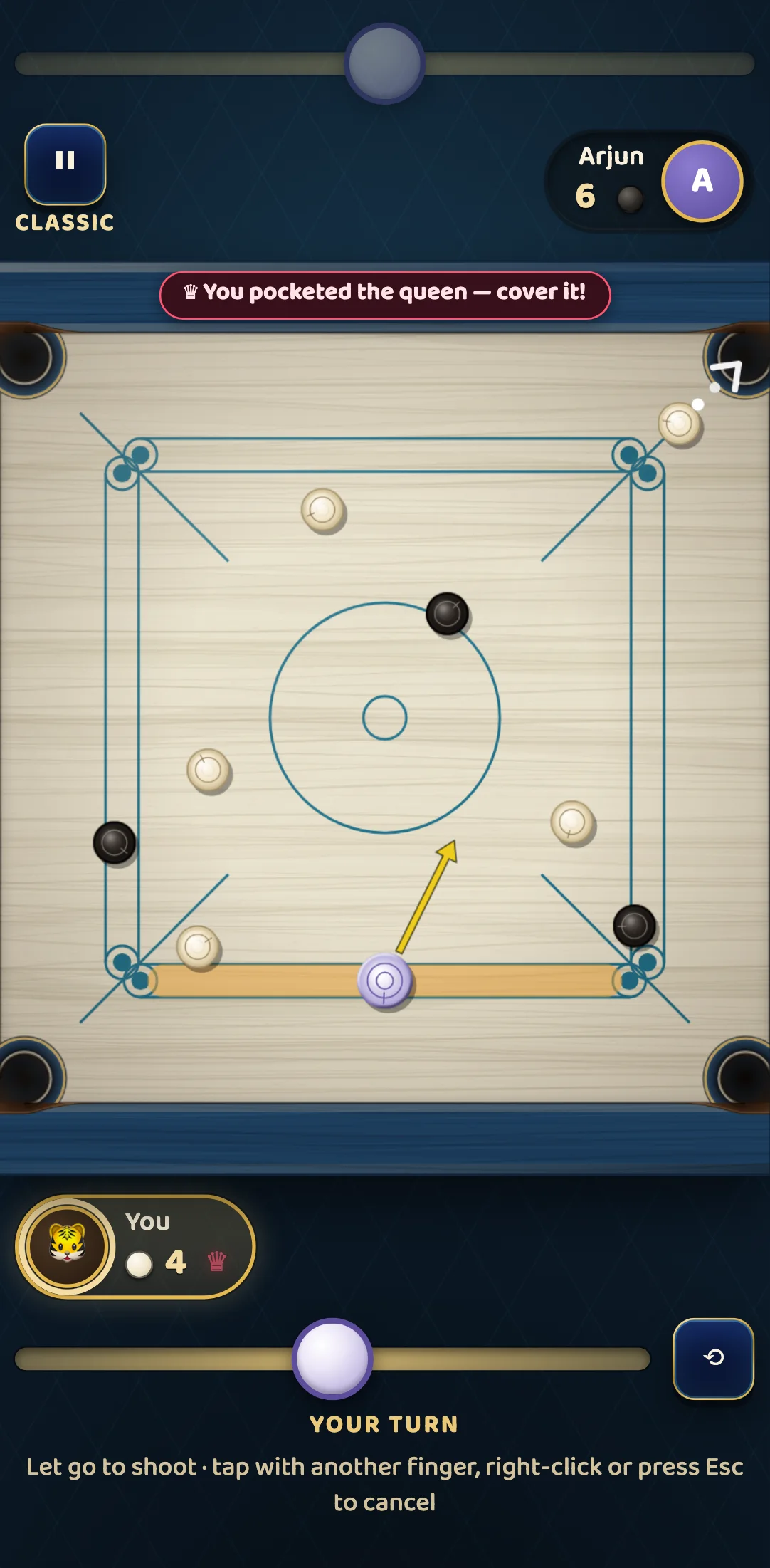
If the cover stroke pots none of your coins, or if it is a foul, the queen goes back to the exact centre of the board. A coin potted in the same stroke as the queen does not count as the cover, except your ninth coin: queen and last coin together cover the queen at once and win the board.
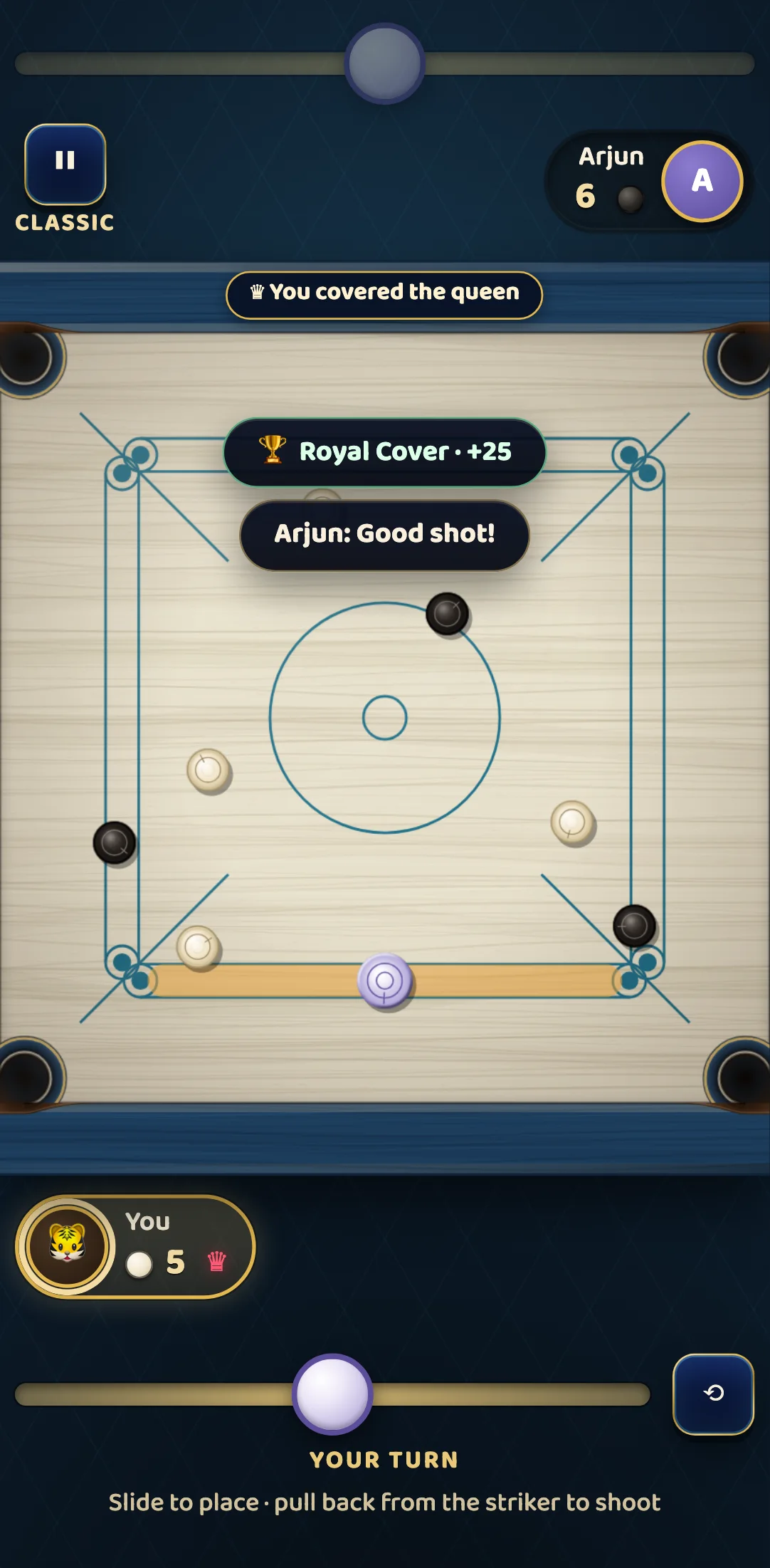
Covering the queen does have small rewards outside the board itself. The first time you do it, the Royal Cover award pays 25 coins. Each covered queen also adds 10 XP and counts towards the Queen badge. None of that changes who wins the board.
Fouls on queen strokes cost more
If the striker flies off the board on the stroke that pots the queen, the queen comes back to the centre, every coin potted with that stroke is cancelled, and one of the coins you already had down comes back too. A foul on the cover stroke also sends the queen back.
So play queen strokes softer than you think you need to. Our pace control guide explains why a firm, controlled stroke beats a hard one.
What the bots do with the queen
The computer players follow the same logic. Easy, Medium and Hard score every stroke they consider: potting the queen earns a bonus, covering it earns a bigger one, and a stroke that sends the queen back costs them. The Expert bot goes further. It only pots the queen when it is likely to have a cover shot next. Once it has eight coins down with the queen still on the board, the queen is the only piece it aims at, because it knows its last coin would just come back.
When you play Expert and it is close to finishing, that is your cue: keep the queen hard to reach.
In the 29 Game it is different
Everything above is about Classic. In the 29 Game, the queen is worth 5 points to the side that covers it and wins the board, as long as that side has 23 points or fewer. It also cannot be your side's first piece. That makes the queen a real prize there, and our 29 Game strategy guide covers when it is worth chasing.
A quick checklist
- In Classic, the queen adds nothing to your count. It decides when the board can end.
- Nobody can clear their last coin until the queen is covered, by either side.
- Behind: leave the queen in play, keep it away from the pockets, and never pot their ninth coin.
- Ahead: settle the queen around the middle of the board, while you still have coins to cover with.
- Choose your cover coin before you play at the queen.
- Play queen strokes at a controlled pace, because a foul sends the queen back and costs you a coin.
For what happens once only a few coins are left, read our carrom endgame guide.
Facts checked with the Carrom by 22Softwares team against the game’s rules engine.